
Many DeFi users still treat wallets as little more than key managers: safe places to sign transactions and display balances. That assumption is dangerous. In practice, a modern Web3 wallet is where risk assessment, dApp integration, and transaction simulation meet human decision-making. Treating it as only cryptography misses how user experience and on-chain complexity shape losses and gains.
This article takes a concrete case — a mid-sized US trader preparing to interact with a new leveraged AMM and a freshly deployed governance token — to show how transaction simulation and richer dApp integration change choices. Along the way I’ll dismantle common myths, explain mechanisms behind simulation and integration, highlight clear trade-offs, and give practical heuristics you can reuse the next time you approve, swap, or bridge.
Case: approving token allowances, then swapping on a newly deployed AMM
Scenario: you hold USDC and want to swap into a new governance token on an AMM that launched last week. The dApp asks for an unlimited token approval. The interface looks clean, TVL seems believable, and community posts cite promising yields. What do you do?
Misconception #1: “If the contract is verified on-chain, it’s safe.” Reality: source verification helps, but it doesn’t remove economic or logic bugs. Verification proves what code is on-chain and that bytecode corresponds to a repository; it doesn’t guarantee safe economic parameters, or that later admin upgrades won’t change behavior. Simulation and richer dApp integration are tools to expose the actual execution path before your signature reaches the mempool.
How transaction simulation works and why it matters
At its core, transaction simulation runs your intended transaction (or a bundle of transactions) on a local or remote node using the current chain state but without broadcasting. That exposes the exact EVM traces, gas usage, return values, reverts, and emitted events you would observe if the transaction executed now. Good simulators can also replay the transaction with different block-level variables — higher gas, different oracle prices, or simulated MEV front-running — to show plausible outcomes.
Mechanics matter: a simulator requires an accurate view of state (token balances, allowances, oracle values, pending nonces) and the same EVM semantics the chain enforces. Differences in provider nodes, or in the simulator’s fork point, can create false negatives or false positives. That’s why integrated wallets that run simulations close to the user’s RPC and offer deterministic replay reduce false confidence.
dApp integration: richer context, but trust trade-offs
Deep dApp integration means the wallet understands not just a raw transaction but the dApp-level intent: “swap USDC→TOKEN via pool X,” “enter leveraged position with 10x,” or “approve unlimited allowance for router Y.” With that knowledge, a wallet can perform meaningful checks — detect approvals to proxy contracts, highlight delegate calls, or estimate slippage and liquidation thresholds. It can show human-friendly warnings where raw bytecode would be opaque.
But integration introduces trade-offs. The wallet must parse dApp data (ABI, calldata) and often needs curated heuristics about common attack patterns. Those heuristics can be incomplete or produce false alarms. Worse, deeper automation can make users complacent: if the wallet presents “recommended” gas or “safe” defaults, users may accept without thinking. The right balance is transparent tooling that surfaces its uncertainty and lets experienced users dive deeper.
Putting simulation and integration together: a decision framework
Use this four-step heuristic when the transaction matters: (1) Intent check — is the action what you expect at the dApp level? (2) Surface risks — does the simulation show any reverts, unexpected transfers, or cross-contract calls? (3) Economic stress-test — replay the transaction under adverse oracle or price scenarios to see slippage, liquidation, or sandwich risk; (4) Permission hygiene — prefer limited, single-use approvals and explicit contract addresses rather than “infinite” allowances.
This framework rests on mechanism thinking. Intent check maps to reading calldata and ABI decoding. Surface risks map to execution traces. Economic stress-tests map to parameter perturbations in the simulator. Permission hygiene follows from the observation that most on-chain thefts exploit broad approvals rather than signature theft.
Where these tools break or give false comfort
Simulators cannot predict future user behavior or external transactions that may race yours in the mempool. MEV (miner/extractor value) and front-running are structural features of permissionless blockchains: simulation can estimate the surface area for sandwich attacks but cannot guarantee they will not occur. Similarly, a simulator that runs on a forked state will miss off-chain oracle updates or layer-2 state channels that change outcomes between simulation and execution.
dApp integration also faces limits: it relies on correct ABI and honest metadata from the dApp, and it may not detect malicious upgradeability patterns hidden in delayed governance actions. Also, wallets that connect to centralized indexing services for better UX gain richer signals at the cost of additional trust in those indexers. Those trust choices should be visible to users.
Practical choices for US-based DeFi users
Policy and user expectations in the US emphasize informed consent and transparent risk disclosure. Practically, that means you should expect a wallet to turn opaque bytecode into actionable warnings: flag unlimited approvals, show the exact destination of any transfer, estimate worst-case slippage, and reveal admin/upgrade keys. If a wallet presents those checks and also allows you to run a custom stress test before signing, you gain agency without needing to be a developer.
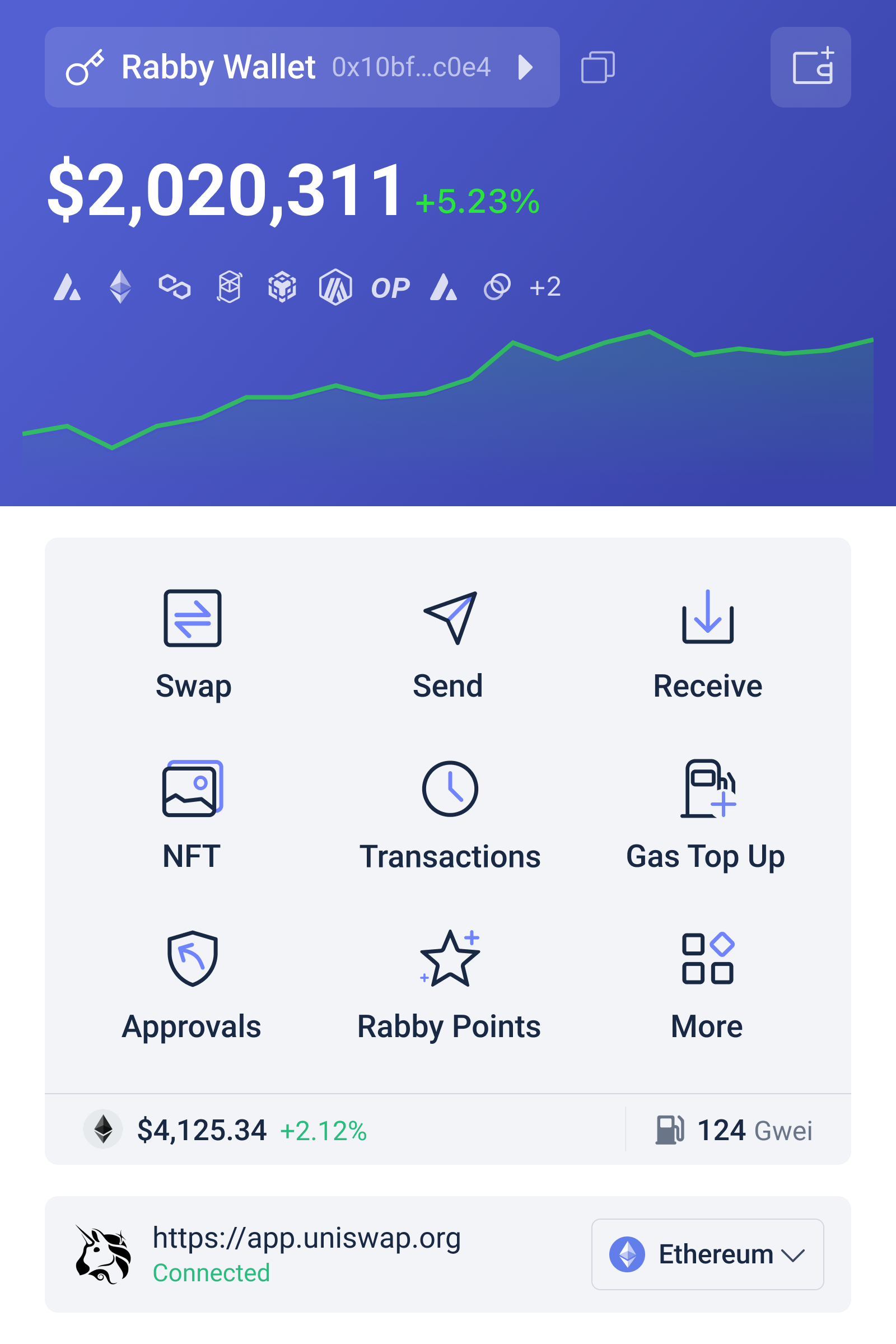
If you want a wallet that combines these features and a careful UX for approvals and simulations, consider solutions that integrate transaction simulation directly into the signing flow and make permission management first-class. One such project is rabby, which places simulation and permission hygiene at the center of the experience rather than tucking them into advanced settings.
Decision-useful heuristics
– Never approve “infinite” allowances for unfamiliar contracts; prefer time-limited or small-amount approvals and use permit-style flows when available.
– Before large swaps or leveraged positions, simulate under a 10–30% adverse price move and a doubled gas price to see execution and liquidation sensitivity.
– Treat “verified source” as informational, not conclusive. Add checks for upgrade keys, owner addresses, and multisig thresholds.
– For repeat interactions with a dApp, consider a dedicated, minimal-asset wallet rather than using your primary treasury key—this reduces the blast radius of a compromised approval or key leak.
What to watch next
Two trend signals matter: (1) richer wallet-side simulators that can run parallel stress scenarios are becoming expectations rather than premium features; and (2) more sophisticated permission standards (single-use permits, scoped approvals) are likely to be adopted by major DeFi protocols because they reduce user friction and systemic risk. Both trends reduce certain classes of loss but increase dependence on wallet UX correctness and on-indexer trust. Monitor whether wallets make their simulation assumptions and fork points auditable.
Finally, pay attention to developer practices: a surge in contracts offering “meta-transactions” or proxy patterns should make you ask about upgradeability and multisig controls before you sign. Where the evidence is thin, prefer conservative defaults.
FAQ
Q: Can transaction simulation stop me from getting front-run or MEV’d?
A: No simulation can stop MEV; it can only reveal susceptibility. Simulation can estimate whether a swap will be profitable for a sandwich attacker or whether your route is exposed, and it can suggest guardrails (higher slippage tolerance, gas timing). But it cannot prevent other actors from racing your transaction once you broadcast it.
Q: If a contract is verified, why should I still worry about approvals?
A: Verification tells you what code matches the published source, but it doesn’t change the economic rights a contract has once you grant approvals. A verified contract with an admin function or upgrade hook can still receive tokens you approved and transfer them under certain conditions. Permission hygiene — limited approvals, revoking unused allowances — is still essential.
Q: How reliable are wallet heuristics that flag “suspicious” transactions?
A: They are helpful but imperfect. Heuristics catch common patterns like proxy approvals or sudden transfers on approval, but they can miss novel attack patterns or generate false positives. Good wallets surface the heuristic, explain its basis, and allow expert users to inspect low-level calldata and traces.
Q: When should I use a separate wallet for a risky dApp?
A: Use a dedicated wallet when interacting with newly deployed contracts, trustless AMMs with low liquidity, or any protocol that requests large permissions. The extra operational step reduces the impact of a compromised approval and keeps your main net worth insulated from a single bad interaction.