A cheaper transaction is not necessarily a better transaction. In DeFi, the most expensive mistake is often not a high gas fee but a failed approval, an unintended token swap, or a signature that exposes more authority than the user realized. Transaction simulation turns a wallet from a passive signing tool into a pre-flight inspection system. That distinction matters especially across multiple networks, where the same button can trigger very different contract behavior, fee markets, and security risks.
For US-based DeFi users, the practical question is not simply “How do I pay less gas?” It is “How do I reduce the total cost of completing a transaction without weakening safety?” That total includes network fees, failed attempts, slippage, bridge risk, waiting time, and the value of making a decision with incomplete information. A multi-chain wallet can help organize that decision, but simulation is useful only when its limits are understood.
The First Myth: Gas Optimization Means Choosing the Cheapest Chain
One common misconception is that gas optimization means moving every transaction to the network with the lowest quoted fee. The error is subtle: gas is only one part of transaction cost. A low-fee network may have thinner liquidity, different bridge assumptions, fewer familiar applications, or a token price that makes the economic result worse than expected.
Gas is the fee paid for computational work and blockspace. On Ethereum-compatible networks, the amount depends on the transaction’s gas usage and the price accepted by the network. A simple transfer generally consumes less computational work than a decentralized exchange trade, while a complex liquidity, lending, or staking interaction may require considerably more. The wallet can estimate this cost, but the estimate is not a promise. Network demand, transaction replacement, base-fee changes, and application-specific execution paths can alter the final result.
A better mental model is to separate three questions. First, how much computation will the transaction require? Second, how much is the network charging for that computation right now? Third, what does the transaction actually do if it succeeds? Simulation primarily helps with the third question. It can reveal expected balance changes and likely failures, while gas estimation addresses the first two. Treating them as interchangeable is a mistake.
What Transaction Simulation Actually Does
A transaction simulation asks a node or related execution environment to process a proposed transaction without committing it to the blockchain. The proposed call includes details such as the destination contract, function data, sender address, token amounts, and gas parameters. The simulated execution follows the current state as closely as the environment allows and reports whether the call appears likely to succeed.
For a user, the valuable output is not merely a green “success” label. A useful simulation can help explain which assets may leave the wallet, which assets may arrive, whether an approval is being granted, and whether the contract appears to be interacting with the intended application. This is especially important because decentralized applications often compress complicated contract calls into a short interface label such as “Supply,” “Swap,” or “Confirm.” The wallet view can provide a second interpretation of the action.
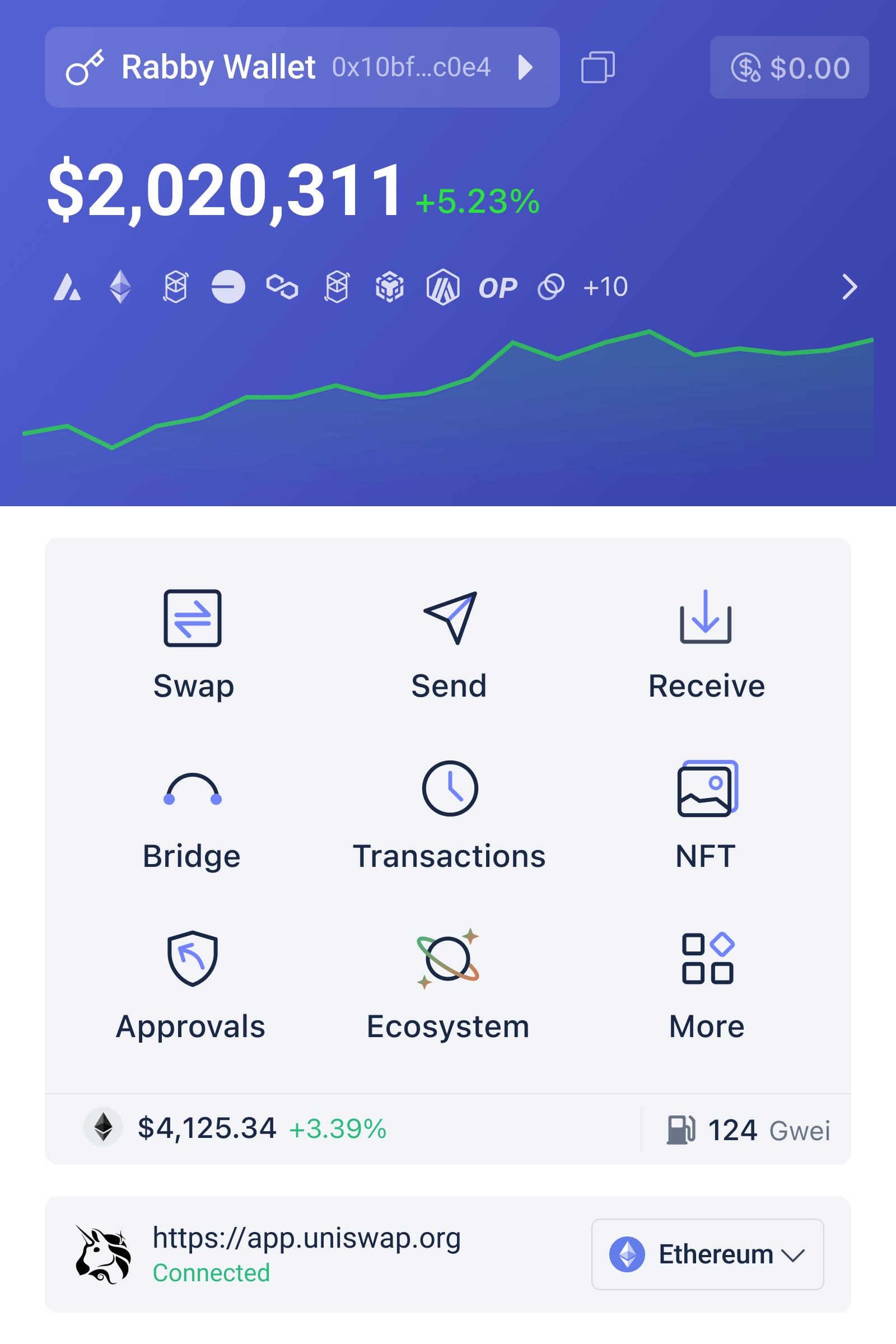
When installing a wallet extension, users should obtain it through a trusted source and verify the extension’s permissions, domain, and update path before importing or creating an account. The rabby wallet extension can be useful for users who want transaction previews and multi-chain account management, but no wallet interface eliminates the need to check the website, network, contract address, and requested signature.
Simulation is therefore best understood as a risk-reduction layer, not a guarantee. It can detect a likely revert, an unexpected asset movement, or a suspicious approval pattern under the state it observes. It cannot prove that a contract is honest, that a website has not been compromised, or that the state will remain unchanged before the transaction is mined.
The Second Myth: A Successful Simulation Means a Safe Transaction
Success and safety are different properties. A malicious contract can execute exactly as designed. If the design is to transfer an authorized token balance, the simulation may correctly show a successful transfer. Likewise, a legitimate trade can produce a poor outcome if the user accepts excessive slippage or if liquidity changes before execution.
The boundary is created by blockchain timing. Between simulation and settlement, another transaction may alter a pool’s reserves, consume an available lending position, change an oracle value, or make a contract condition fail. Public transactions may also be visible before inclusion, creating opportunities for ordering effects. The shorter the interval between review and signing, the more relevant the simulation tends to be, but the underlying uncertainty never falls to zero.
Another limitation is cross-chain state. A wallet may display several networks in one interface, but each blockchain maintains its own state and finality assumptions. A transaction on one chain does not automatically update balances on another. Bridges add messages, relayers, custody or verification mechanisms, and sometimes delayed settlement. A simulation of the source-side transaction cannot fully guarantee the outcome of every later step on the destination chain.
Three Ways to Approach Multi-Chain Gas Optimization
Use the wallet’s simulation and fee estimate
This is the most convenient approach and often the best default for ordinary users. The wallet can present a transaction preview, estimate the network fee, and identify obvious balance changes. It reduces the need to decode raw contract data and helps users compare a normal transaction with a more complex one.
The trade-off is dependence on the wallet’s data sources and interpretation. A preview may simplify a complicated call, and a fee estimate can become stale. Users should pay special attention to unlimited approvals, permit signatures, delegate permissions, and transactions involving unfamiliar contracts. Convenience is valuable, but it should not be confused with independent verification.
Compare networks before acting
For applications deployed across several networks, users can compare expected fee conditions, liquidity, execution quality, and settlement assumptions. A rollup or alternative Ethereum-compatible chain may reduce the direct cost of a swap or contract interaction, while Ethereum mainnet may offer deeper liquidity or a more established security model for certain applications.
The trade-off is fragmentation. Funds may need to be bridged, liquidity may differ, and the cheapest route may require multiple transactions. If a user pays a bridge fee, performs an approval, executes a swap, and later bridges back, the combined cost can exceed a single transaction on a more expensive network. The correct comparison is the cost of the complete path, not the headline fee of one step.
Use a dedicated transaction or contract-analysis tool
More technical users can inspect calldata, contract verification, token permissions, and state changes through independent interfaces. This can provide deeper visibility and reduce reliance on a single wallet’s presentation layer. It is particularly useful for large positions, unfamiliar protocols, or governance actions with long-lived permissions.
The sacrifice is usability. Raw calldata and contract traces are difficult to interpret, and an expert-looking interface can still be fed incomplete or misleading information. Independent tools improve scrutiny only when the user understands what each tool can and cannot verify.
A Practical Framework: Optimize the Whole Transaction Path
Before signing, ask four questions. What will leave the wallet? What should arrive, and within what tolerance? Which permissions will remain active afterward? What happens if the transaction fails or only one stage of a multi-step process completes?
That last question is often overlooked. On a single blockchain, a transaction is generally atomic: either the complete call succeeds or the state changes are reverted, although gas may still be consumed. A broader user workflow is not necessarily atomic. A bridge deposit can succeed while the destination message is delayed. An approval can succeed while the subsequent swap fails. A user optimizing only the swap fee may miss the cost and exposure created by the surrounding steps.
For routine actions, a sensible workflow is to confirm the active network, inspect the recipient or application domain, review token and approval changes, compare the fee with the transaction’s economic value, and simulate immediately before signing. For larger or unfamiliar actions, use a small test transaction when practical, limit approvals rather than granting unnecessary spending authority, and avoid treating a favorable preview as a substitute for contract and protocol due diligence.
There is also a behavioral dimension to optimization. Users often wait for lower fees, then rush when a trading opportunity appears. That can create a false economy: a modest saving in gas may be outweighed by worse slippage, a missed deadline, or an impulsive signature. Fee timing should be considered alongside liquidity and execution risk, not in isolation.
What to Watch as Wallets Become More Intelligent
If simulation tools improve, the most useful development will not be a more dramatic fee number. It will be clearer separation between estimated execution, observed balance changes, persistent permissions, and unresolved risks. Wallets could increasingly help users compare complete transaction paths rather than isolated calls, especially for bridging, routing, and multi-step DeFi strategies.
That progress remains conditional. Better previews depend on reliable node data, accurate protocol decoding, timely state information, and interfaces that do not hide uncertainty behind a simple safety color. As applications become more composable, simulations may also become harder to interpret because one transaction can invoke several contracts with different assumptions. The signal to watch is whether wallets explain uncertainty more honestly, not merely whether they display more information.
The durable lesson is straightforward: gas optimization is a decision problem, while simulation is an evidence tool. Use the preview to understand likely execution, compare the full economic path across networks, and treat approvals and bridge steps as part of the risk surface. A transaction that costs slightly more but is clearer and more controllable can be cheaper in the only sense that ultimately matters: total loss avoided.
Frequently Asked Questions
Can transaction simulation prevent a crypto wallet from being drained?
No. Simulation can expose suspicious transfers, unexpected approvals, or likely balance changes, but it cannot prove that a contract or website is trustworthy. Users must still verify the application source, requested permissions, contract context, and transaction purpose.
Does using a lower-fee blockchain always save money?
No. The full cost may include bridging, extra approvals, poor liquidity, slippage, and the cost of moving funds back. Compare the complete transaction path and expected execution, not just the displayed gas estimate for one call.
Why can a transaction fail after the simulation looked successful?
Blockchain state can change between simulation and settlement. Pool reserves, oracle values, account balances, protocol conditions, and network fees may move. Simulation is a current-state estimate, not a binding reservation of execution.